
How To Clean an AGA Oven
How to Clean an AGA Oven
- Preserve the Enamel: Standard, caustic chemical sprays will permanently dull and damage an AGA’s enamel finish. Stick to gentle, specialist, or eco-friendly products and sprays.
- Never Use Vinegar on Enamel: While baking soda is safe, acidic household ingredients like vinegar or lemon juice should never be used on an AGA’s outer enamel as they cause permanent etching and staining.
- Different Zones, Different Tactics: Cast iron hotplates, chrome lids, and high-gloss enamel frames require separate, targeted cleaning steps.
- Know When to Delegate: If carbonised grease has built up over months or years, hiring a professional cooker cleaning service is the safest way to fully dismantle, clean, and restore your cooker without risking expensive damage.
An AGA is built to last a lifetime, but it needs regular care. Between constant roasting, baking, boiling, and everyday family use, grease and carbon deposits can build up quickly.
Maintaining a consistent cooker cleaning schedule does more than just keep your kitchen looking pristine; it directly prevents smoke, unpleasant odours, and major cooking inefficiencies. According to home safety studies by the National Fire Protection Association (NFPA), unattended cooking materials and accumulated grease are the leading causes of domestic kitchen fires and structural smoke damage. To understand why letting grime build up is risky for your home, take a look at our guide on the dangers of dirty ovens.
This comprehensive guide covers the best way to clean oven surfaces on an AGA, highlighting safe methods, gentle grease removal, and when calling in a professional oven cleaner is the smartest option.
Step 1: Pre-Inspection and Diagnostics
Before our people who clean ovens bring any equipment into your kitchen, we run a full structural and functional diagnostic test. We check the internal heating elements, control dials, and internal fan mechanisms to verify everything works properly. For homeowners learning how to keep your oven clean all year round, running a quick visual inspection before applying any product prevents short circuiting electrical elements.
Step 2: Component Disassembly
You can’t get an easy way to clean the inside of oven housings without stripping away the obstructions. Our technicians carefully remove the internal side racks, grill pans, main baking trays, and the integrated circular fan guard shell.
Step 3: The Deep-Tank Dip Process
Once the parts are out, they don’t sit on your kitchen counters. We take the dirty pieces out to our specialised service vehicles. The components are submerged in a custom, heated deep-soak tank filled with a specialised oven rack cleaner solution. This eco-safe, non-caustic fluid softens carbonised crusts without damaging the metal, making it the best way to clean oven racks completely.
Step 4: Stripping and Cleaning Oven Door Glass
Oven doors collect a massive layer of caramelised oils. To perform an effective oven deep clean, our teams don’t just wipe the surface; we split the door panels apart.
Using an industrial-grade oven glass cleaner, we break apart the white grease shadows trapped between the dual or triple glass layers. If you are tackling this as a DIY project, using a dedicated oven door cleaner along with a flat scraper blade held completely flush against the pane is the safest method for cleaning oven door glass without causing microscopic scratches that compromise structural integrity.
Step 5: Pre-Treating the Internal Chambers
While the racks are cooking in the vehicle dip tank, our technicians focus on the interior liner. We apply a specialised, fume-free cleaner for inside oven coatings. Unlike highly volatile, caustic chemicals that require heavy ventilation masks, a premium, top rated oven cleaner should safely cling to vertical walls and dissolve stubborn polymer chains without producing harmful indoor air emissions.
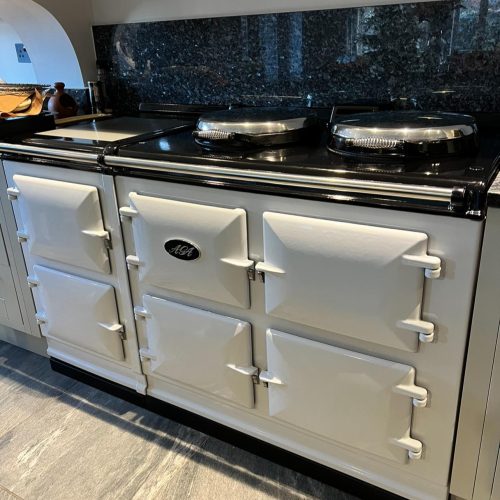
Step 6: Detail Scrape and Internal Degreasing
With the formula set, we use specialised tools to lift away hidden crusts. Our technicians use carbon scrapers to slice through baked-on carbon rings around the fan casing and corners.
If you are trying to remove grease from oven corners at home, check out our step by step instructions on how to remove oven grease safely without scratching your delicate enamel plates.
Step 7: Restoring the Fan and Heating Elements
A clogged fan forces your cooker to struggle to move air, creating cold spots and uneven bakes. We carefully clean the blades to ensure your unit works properly. If you are attempting to clean fan oven models yourself, never spray liquid formulas directly into the central motor spindle housing, as this can destroy the electrical insulation.
Step 8: External Polish and Stove Diagnostics
Next, we turn our attention to the exterior. Whether you have a ceramic, induction, or traditional gas hob, we utilise an advanced glass top oven cleaner or heavy-duty stove cleaner paste to erase rainbow heat rings and burnt-on liquid rings.
1 Apply specialised cream
Apply a small amount of non-abrasive electric stove top cleaner directly onto the cool glass surface.
2 Break down grease
Allow the cream to break down tough residues and ring marks around the burners.
3 Buff with microfiber
Using a clean, dry microfiber cloth, buff the surface in tight circular motions to remove residue and leave a streak-free shine.
To explore alternative appliance care tactics, take a look at our compiled guide on the top 10 oven cleaning tips.
Step 9: Reassembly and Inspection
After rinsing and drying all components from our vehicle dip tanks, we carefully reinstall the racks, fan guards, and glass panels. We check the door alignment and seal seating to ensure no precious heat escapes while you cook.
Step 10: Final Polish and Performance Handover
The final stage is a complete external detail. We spray and wipe down the control dials, handle bars, and external trim with a high shine finish. The result is a stunning, mirror like finish that makes your appliance look like it just rolled out of the showroom. To see stunning examples of what our technicians achieve daily, browse our gallery of oven cleaning pictures before and after transformations.
Is It Time to Get Your Oven Cleaned?
While regular maintenance using a safe oven cleaner helps keep daily grease at bay, nothing matches the deep sanitisation provided by a professional oven cleaning service. Trying to scrub out years of caramelised grease using consumer grade supplies can take hours of hard work and often yields disappointing results.
The UK Health and Safety Executive (HSE) consistently issues warnings regarding the risks of using harsh, corrosive chemical treatments in unventilated domestic kitchens. Entrusting your cooker to a certified local oven cleaning service means the job is completed efficiently using safe, non-toxic solutions that protect both your family and your appliance.
At Oven Rescue, our professional teams treat your home with the utmost care. Skip the exhausting work and let the experts handle it. Reach out today for an oven clean quote. Let us restore the shine and efficiency to your kitchen!
Frequently Asked Questions (FAQs)
A professional range oven cleaning service for an AGA typically takes between 2 and 4 hours. The exact time depends on your specific model (e.g., a 2-oven vs. a 5-oven model) and the level of baked-on carbon buildup. Because our professional oven cleaning service uses van-mounted heated dip tanks to clean component parts outside, we save a substantial amount of time compared to standard domestic scrubbing. For a deeper breakdown of appointment lengths across different oven types, read our guide: how long does an oven clean take?
Yes, absolutely. To get your oven professionally cleaned, all AGA models must be completely cold. Traditional cast iron models (Gas, Oil, or 13-amp Electric) should be turned off at least 24 hours in advance of your appointment to ensure they are cool enough to clean safely. For modern Total Control or Dual Control models, ensure the heat zones are turned off ahead of time. Cleaning a hot AGA can cause liquid solutions to instantly evaporate, creating dangerous thermal shock that can microscopically crack the vitreous glass enamel.
The overall oven cleaning cost varies based on the size of your appliance and your location. Standard single electric ovens are cheaper to treat, whereas a larger range oven cleaning or full-size AGA requires specialised expertise, structural disassembly, and more time, which reflects in the service price. To get an exact price tailored directly to your specific kitchen layout, feel free to request a free, no-obligation oven clean quote with our team.
For regular family use, booking a professional oven deep clean once or twice a year is standard practice. According to home appliance efficiency assessments from the Energy Saving Trust, keeping heating chambers and heavy cast iron components entirely free of thick carbon insulating layers ensures proper, unobstructed heat distribution, directly minimising household energy consumption. Regular servicing prevents unmanageable grease accumulation and long-term surface etching.
Most standard, mass-market supermarket aerosol sprays rely heavily on caustic chemical alkalis like sodium hydroxide. The UK Health and Safety Executive (HSE) warns that these corrosive agents pose a significant respiratory risk if inhaled in confined kitchen spaces. Furthermore, caustic chemicals permanently dull, bleach, and degrade the high-gloss vitreous enamel coating on a premium range cooker. For a safer, grease-lifting alternative at home, always opt for a verified, eco-friendly, non-caustic formula or read our top 10 oven cleaning tips for alternative home maintenance options.
Need a professional AGA oven clean? Book your Oven Rescue clean today!