
How to Clean Oven Glass Without Scrubbing
How to Clean Oven Glass Without Scrubbing
- Baking soda paste is your safest bet — it lifts grease without abrasive scrubbing and won’t damage enamel or glass
- Vinegar works on standard glass but not AGA enamel — check your cooker type before reaching for acid-based solutions
- Prevention beats remediation — catching spills immediately keeps glass clear without aggressive cleaning later
- Scrubbing damages glass — microfibre cloths and soft sponges protect the surface and still deliver results
- Professional cleaning is worth it for built-up carbon — DIY methods won’t shift months of burnt-on deposits
Why Oven Door Glass Cleaning Matters
Oven glass collects grease, steam, and burnt-on splatters quickly. The instinct is to scrub hard at it, but aggressive scrubbing scratches glass surfaces, creates a dull, cloudy finish, and can chip or crack the oven door seal, leading to your oven working inefficiently. For range cookers and AGAs especially, the wrong oven cleaning approach can permanently damage the enamel frames around the glass panel.
Regular, gentle oven glass cleaning not only keeps your oven glass transparent so you can monitor cooking without opening the door (which wastes heat and energy), it also prevents the stubborn, carbonised food that requires professional oven cleaning.
Beyond aesthetics, a well maintained oven door is about safety and efficiency. Trapped grease and carbon buildup around seals forces your oven to work harder to maintain temperature, drives up energy costs, and creates conditions for smoke and odours. For a detailed look at how dirty ovens impact your home and kitchen safety, read our guide on The Dangers of Dirty Ovens.

Step 1: Know Your Oven Type (AGA vs. Standard)
Your cleaning method depends on what you’re cleaning.
Standard Electric Ovens: The glass panel is typically just tempered glass. Vinegar, baking soda, and commercial glass cleaners all work safely.
AGA and Range Cookers: The enamel frame around the glass is silica-based and highly susceptible to acid corrosion. Never use vinegar or lemon juice on the surrounding enamel finish. For a full guide on AGA and range cooker cleaning, please read our guide here.
Accessing Both Sides of Oven Glass: Many oven doors have hinges that allow the glass panel (or the entire glass assembly) to be removed for thorough cleaning of both sides. If your oven glass looks cloudy on the interior, or you can see grease trapped between glass panes, hinge access is often the only way to clean it properly.
Can you remove the hinges yourself? Yes, but with caution. Most modern ovens have simple pin-release hinges — you’ll find a small clip or release mechanism on the hinge itself. Gently pull the pin upward to lift the door free. However, oven doors are heavy and unbalanced once removed, and mishandling hinges can damage the hinge mechanism or door frame, affecting the seal.
If you’re unsure about your door’s hinge mechanism, worried about damaging the seal, or have already tried removing the hinges and found it tricky, a professional oven cleaning service can safely remove, clean, and reseal your entire oven door.
Step 2: The Baking Soda Paste Method
This is the gentlest, most effective cleaning oven door glass method for light to moderate grease buildup.
- Make the paste – Mix bicarbonate of soda with a small amount of water until you have a thick, spreadable consistency.
- Apply generously – Coat the inside of the oven glass door, focusing on greasy patches and oven glass. Leave it to sit for 15–30 minutes. According to HSE guidance on chemical safety in domestic spaces, caustic cleaning products pose respiratory risks in enclosed kitchens, baking soda is a safer alternative that still draws out oils without elbow grease.
- Wipe with a soft cloth – Use a damp microfibre cloth or soft non-abrasive sponge to gently wipe away the paste. Work in circular motions, not hard scrubbing. Buff dry immediately with a clean tea towel to prevent water streaks.
Result: Light to moderate grease lifts easily. The oven glass stays scratch-free.
Step 3: The Vinegar and Baking Soda Method
For standard electric ovens without enamel frames, combining vinegar and baking soda creates a mild fizzing action that shifts stubborn grease.
Do not use this method on AGA or range cooker enamel.
- Spray vinegar first – Lightly spray white vinegar directly onto the greasy areas of the oven door glass.
- Sprinkle baking soda – Dust bicarbonate of soda over the vinegar. It will fizz immediately.
- Let it sit – Leave it for 20–30 minutes. The chemical reaction between the acetic acid in vinegar and the baking soda produces carbon dioxide gas and helps break down grease bonds without requiring scrubbing.
- Wipe gently – Use a soft cloth to wipe away the mixture. Rinse with a damp cloth and dry thoroughly.
Result: Tougher grease shifts without abrasion. No toxic fumes.
Step 4: Prevention
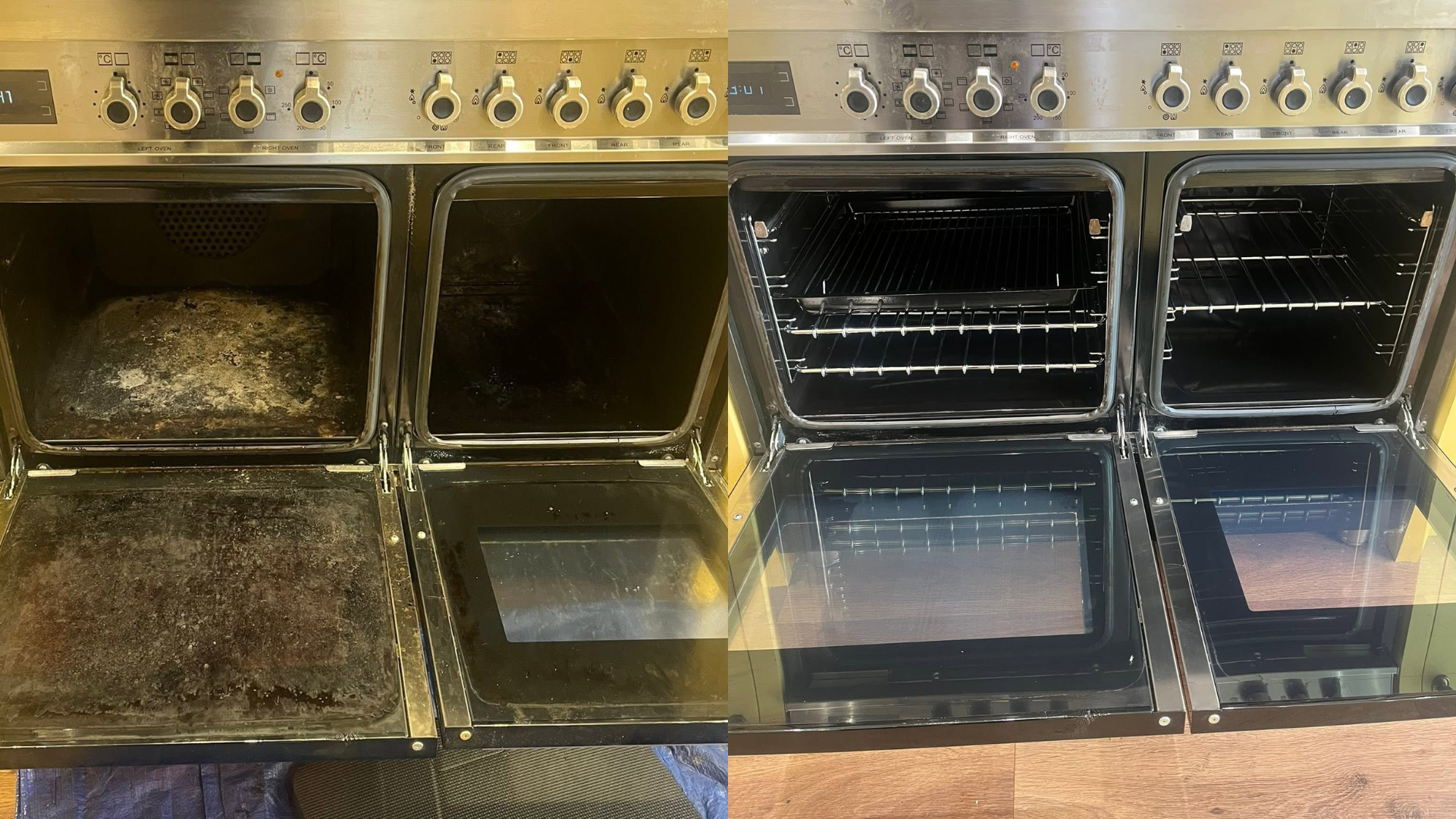
The best way to keep oven glass clean is to stop heavy buildup before it starts. If your oven is past the stage of prevention, it may be time to book a professional oven clean from one of our local professionals.
Catch spills immediately: Keep a dry cloth nearby during cooking. When you spot a spill, wipe it away while it’s still liquid. Once it bakes on, you’ll need chemical or enzymatic action to shift it.
Never use a cold, wet cloth on hot glass: Thermal shock can create microscopic cracks in the surface.
Wipe weekly: A quick weekly oven clean with a dry or barely damp cloth prevents grimy buildup from accumulating.
For more oven cleaning tips, please read our Top 10 Oven Cleaning Tips.
Step 5: When to Call a Professional
If your oven glass has months of carbonised, baked-on grease that baking soda paste and gentle wiping won’t budge, a professional oven cleaning service is your best option.
Heavy buildup often means:
- Grease has hardened into an almost ceramic crust
- DIY methods won’t shift it without aggressive scrubbing (which damages glass)
- The frame or seal may need specialist attention
- Internal glass chambers (if your oven has them) may also need professional cleaning
Our professional oven cleaners will deep clean your entire oven, using non-caustic, eco-friendly cleaning products and methods to restore your oven glass and oven to like new. If you want to know if professional oven cleaning is worth it, please read our guide on Should I Get Professional Oven Cleaning?
Frequently Asked Questions (FAQs)
Yes — but only on standard electric ovens. White vinegar works safely on tempered glass and is effective for stubborn grease when combined with baking soda. However, never use vinegar on AGA or range cooker enamel frames. The acetic acid corrodes silica-based enamel finishes and can cause permanent damage. If you own an AGA or range cooker, stick to baking soda paste only. For a full guide, read our AGA and range cooker cleaning guide.
No. Scrapers and abrasive tools scratch glass surfaces, creating a dull, cloudy finish and potentially chipping or cracking the seal around the door frame. This forces your oven to work harder to maintain temperature and can lead to heat loss and higher energy costs. Always use soft microfibre cloths or non-abrasive sponges instead — they remove grease effectively without damaging the surface.
No. Bleach is too harsh for oven glass and can damage seals, enamel frames, and the glass itself. It also produces toxic fumes in enclosed spaces. Baking soda and vinegar are far more effective and safer alternatives that won’t harm your oven or your health.
Yes. Most modern oven doors have hinges with simple pin-release mechanisms — look for a small clip on the hinge and gently pull the pin upward to lift the door free. However, oven doors are heavy and unbalanced once removed, and mishandling hinges can damage the hinge mechanism or compromise the seal. If you’re unsure about your door’s hinge system, worried about damaging the seal, or have already tried and found it tricky, Oven Rescue professional cleaners can safely remove, clean, and reseal your entire door.
A quick weekly wipe with a dry or barely damp cloth keeps grease from building up. Catching fresh spills immediately (while still liquid) is even more effective and takes seconds. Regular, gentle maintenance prevents the stubborn, carbonised grease that requires professional oven cleaning later. If you cook frequently or splash a lot, twice weekly may be better.
Yes, if your oven has months of carbonised, baked-on grease. DIY methods won’t shift heavy buildup without aggressive scrubbing, which damages glass and risks scratching seals. Oven Rescue uses non-caustic, eco-friendly products and specialist techniques to deep clean your oven safely — including interior glass chambers, frames, and seals — restoring your oven to like new. Browse our before and after gallery to see the results, then book your local professional cleaner.
Need a professional oven clean? Book your Oven Rescue clean today!