
Natural Oven Cleaning Hacks: The Best Way to Clean Your Oven
Natural oven cleaning uses everyday ingredients like distilled white vinegar, bicarbonate of soda and steam to cut through grease without harsh chemicals or fumes.
- Bicarbonate of soda paste plus a distilled white vinegar for cleaning rinse is the most effective natural oven cleaner combination for glass, racks and interiors
- A steam clean oven method is the quickest option for light, everyday maintenance
- Natural methods work well for light-to-moderate grease, but heavy, long-neglected carbon build-up, AGAs and range cookers usually need a professional clean instead
- The same bicarbonate-and-vinegar approach doubles up as a natural hob cleaner, stove cleaner and microwave cleaner
What Is a Natural Oven Cleaner?
A natural oven cleaner is a cleaning method made from kitchen-cupboard ingredients, usually bicarbonate of soda, distilled white vinegar for cleaning, lemon or salt, instead of caustic, chemical-based oven cleaning products.
Many shop-bought oven cleaners rely on sodium hydroxide, also known as caustic soda, which is effective at cutting grease but needs careful handling, GOV.UK highlights the risks and safe handling of sodium hydroxide, which is why a lot of households prefer a gentler, natural approach.
Some ovens also have a self-cleaning function, which may be worth considering alongside the natural oven cleaning methods in this guide. If you’d like to learn more about how to self-clean, take a look at our guide on Self-Cleaning Ovens guide.

Best Natural Oven Cleaning Hacks
The most effective oven cleaning hacks combine bicarbonate of soda with vinegar, steam, or lemon to lift grease with minimal scrubbing. Here’s what actually works, and how to use each one safely.
Distilled White Vinegar for Cleaning Ovens
Distilled white vinegar for cleaning ovens works best as a follow-up to a bicarbonate of soda paste. The vinegar reacts with any leftover residue, creating a light foam that lifts grime and leaves glass and metal surfaces streak-free.
- Pour into a spray bottle and mist over any leftover paste
- Leave for a few minutes to foam and loosen dirt
- Wipe away with a damp cloth
- Use neat for a final polish on oven doors and hobs
Bicarbonate of Soda (Baking Soda) Paste
This is the classic grease cleaner for anyone looking for the best way to clean oven interiors without chemicals. Mix bicarbonate of soda with a little water into a thick paste, spread it over the oven walls and base (avoiding heating elements), and leave it to work overnight.
In the morning, wipe out the paste with a damp cloth, then follow with a vinegar spray to lift any remaining film. It’s slow, but it’s one of the most reliable oven cleaning tips for baked-on carbon.
Steam Clean Oven Method
A steam clean oven method is the quickest natural option when you’re short on time. Place an oven-safe bowl of water (with a squeeze of lemon, if you like) on the middle shelf, heat the oven to around 100–120°C for 20–30 minutes, then switch off and let it cool.
The steam softens light grease and food splashes, making them much easier to wipe away, ideal for maintenance cleans between deeper sessions.
Lemon and Salt Degreaser
For fresh spills, lemon and salt make a simple, fragrant oven grease cleaner. Halve a lemon, dip the cut side in salt, and scrub gently over warm (not hot) grease marks. As this UK guide to citric acid for cleaning explains, the citric acid in lemons helps break down grease while the salt adds light abrasion.

How to Clean Oven Glass Doors Naturally
The best oven glass cleaner for natural cleaning is a bicarbonate of soda paste followed by a vinegar rinse, which lifts grime without scratching the glass.
- Spread a thick bicarbonate paste over the inside of the glass
- Leave for 20–30 minutes to loosen grease
- Wipe with a damp cloth, then spray with white vinegar
- Buff dry with a clean, lint-free cloth for a streak-free finish
This same method works as an effective oven door cleaner and oven glass door cleaner for the frame and handle too, provided you avoid any door seals and hinges. When cleaning oven doors and oven class, it’s crucial to not scrub away at the glass, as that will produce scratches and potential cracks. Please read our guide on How To Clean Oven Glass Without Scrubbing to ensure you’re cleaning your oven glass correctly and safely.
Best Way to Clean Oven Racks Naturally
The best way to clean oven racks naturally is to soak them in a bath, sink, or large container of hot water, bicarbonate of soda and a splash of vinegar for a few hours, then scrub with a non-scratch sponge.
- Line the bath or sink with an old towel to prevent scratches
- Add hot water, a generous amount of bicarbonate of soda, and vinegar
- Leave racks to soak for 3–4 hours (or overnight for heavy grease)
- Scrub gently and rinse thoroughly before drying
A dedicated oven rack cleaner bag can make this easier if you’re doing it regularly, but the soak method needs nothing more than what’s already in your kitchen.
Please read our guide on The Best Way to Clean Oven Trays for more tips on how to clean the interior of your oven.
Natural Hob, Stove and Grill Cleaning Tips
Natural cleaning isn’t just for the oven interior, the same ingredients make an effective hob cleaner, stove cleaner and oven and grill cleaner for everyday kitchen grime.
- Best stove top cleaner: a bicarbonate paste left for 10–15 minutes lifts most everyday spills on ceramic and glass hobs
- Stove and oven cleaner combo: vinegar spray works well as a quick daily wipe-down for both
- Oven grill cleaner: soak grill pans the same way as racks, then scrub with a bicarbonate paste for stubborn marks
Always check your hob manufacturer’s guidance first, as some induction and ceramic surfaces are sensitive to abrasive pastes. NEFF’s own hob cleaning guidance, for example, recommends avoiding abrasive materials to prevent scratches.
Natural Oven Cleaner vs Shop-Bought Oven Cleaning Products
Factor
Natural Oven Cleaner
Shop-Bought Oven Cleaning Products
Ingredients
Bicarbonate of soda, vinegar, lemon
Often contain caustic soda (sodium hydroxide)
Fumes
None
Strong chemical fumes, ventilation needed
Cost
Very low (kitchen cupboard staples)
£5–£15 per bottle
Time needed
Several hours (often overnight)
Minutes to an hour
Best for
Light to moderate grease, glass, racks
Heavy, long-neglected carbon build-up
Safety
Non toxic oven cleaner, safe around food
Gloves and ventilation strongly advised

If you want to compare specific shop-bought options, Which? independently tests the best oven cleaner UK brands each year, which is a useful reference alongside natural methods.
Whichever route you choose, a good oven cleaner approach comes down to matching the method to how much grease you’re dealing with; light maintenance suits natural methods, while heavy carbon build-up may need something stronger.
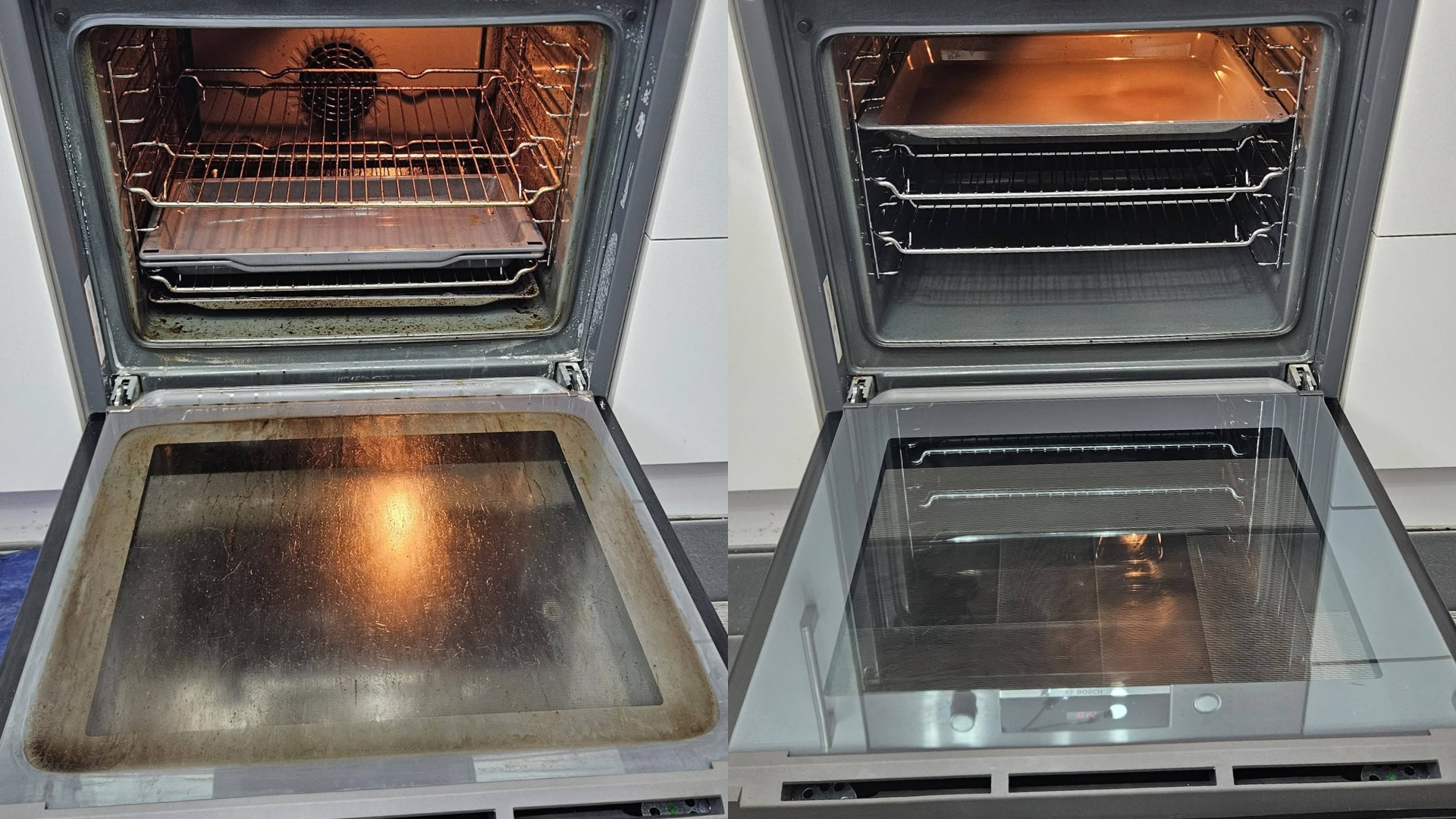
When to Call a Professional Cooker Cleaning Service
Natural methods handle light-to-moderate grease well, but heavy, long-term carbon build-up, AGAs, range cookers or commercial kitchens usually need professional cooker cleaners to finish the job properly and safely.
- A cooker cleaning service uses purpose-made, eco friendly oven cleaner products that dissolve carbon without the fumes of caustic soda
- Commercial oven cleaning and industrial oven cleaner treatments are designed for the heavier use commercial kitchens see
- If you’d rather not tackle it yourself, booking someone to clean my oven is often quicker and safer than repeated natural attempts on very heavy grime
For a closer look at how the two approaches compare, our guide on Should I Get Professional Oven Cleaning? covers this in more detail.
Frequently Asked Questions (FAQs)
The easy way to clean oven interiors is a bicarbonate of soda paste left overnight, followed by a vinegar spray in the morning. It needs minimal effort, just time for the paste to work.
To clean my oven naturally, remove the racks, coat the interior with a bicarbonate paste, leave for several hours, then wipe away and follow with a vinegar rinse for glass and metal surfaces.
Yes, an oven deep clean can be done naturally, though it takes longer than chemical products, usually an overnight soak plus a thorough rinse the next day for heavily soiled ovens.
Yes. A simple microwave cleaner hack is heating a bowl of water with lemon slices or vinegar for 3–5 minutes, then wiping down the softened splatters with a damp cloth.
An oven and grill cleaner approach using a bicarbonate soak works well on most grill pans, though heavily burnt-on grease may need a longer soak or a professional clean.
Yes, this combination is a non toxic oven cleaner option that’s safe around food-contact surfaces, provided all residue is rinsed away before you next use the oven.
Need your oven professionally cleaned? Book your Oven Rescue clean today!
One Response