Self-Cleaning Ovens vs Professional Oven Cleaning: Which Wins?
Self-cleaning ovens burn organic debris into ash in 8–18 hours but leave heavy grease residue, warp racks, and weaken seals.
- How self cleaning ovens work, and their real limitations
- Pros and cons of self-clean cycles vs professional services
- Oven cleaning cost uk: energy use vs professional pricing
- Safety considerations for AGAs, range cookers, and standard ovens
- Why professional oven cleaning handles what self cleaning cannot
How Does a Self-Cleaning Oven Actually Work?
A self cleaning oven locks the door and heats to 480°C for 2-6 hours, burning organic debris into ash you manually wipe out. Racks, glass, and seals are not cleaned by this cycle. If you’re looking to give your oven a full clean at home, read our guide on The Best Way To Clean Oven Trays.
The self-clean process:
- Oven locks automatically during cycle
- Temperature reaches 480°C+ for 2-6 hours (depending on model)
- Organic grease and food burn to ash
- Door remains locked during cool-down (6-12 hours)
- You manually wipe out the ash residue
Read our guide on Top Ten Oven Cleaning Tips for more guidance on how to clean your oven without the self-clean cycle.
How Professional Oven Cleaning Works
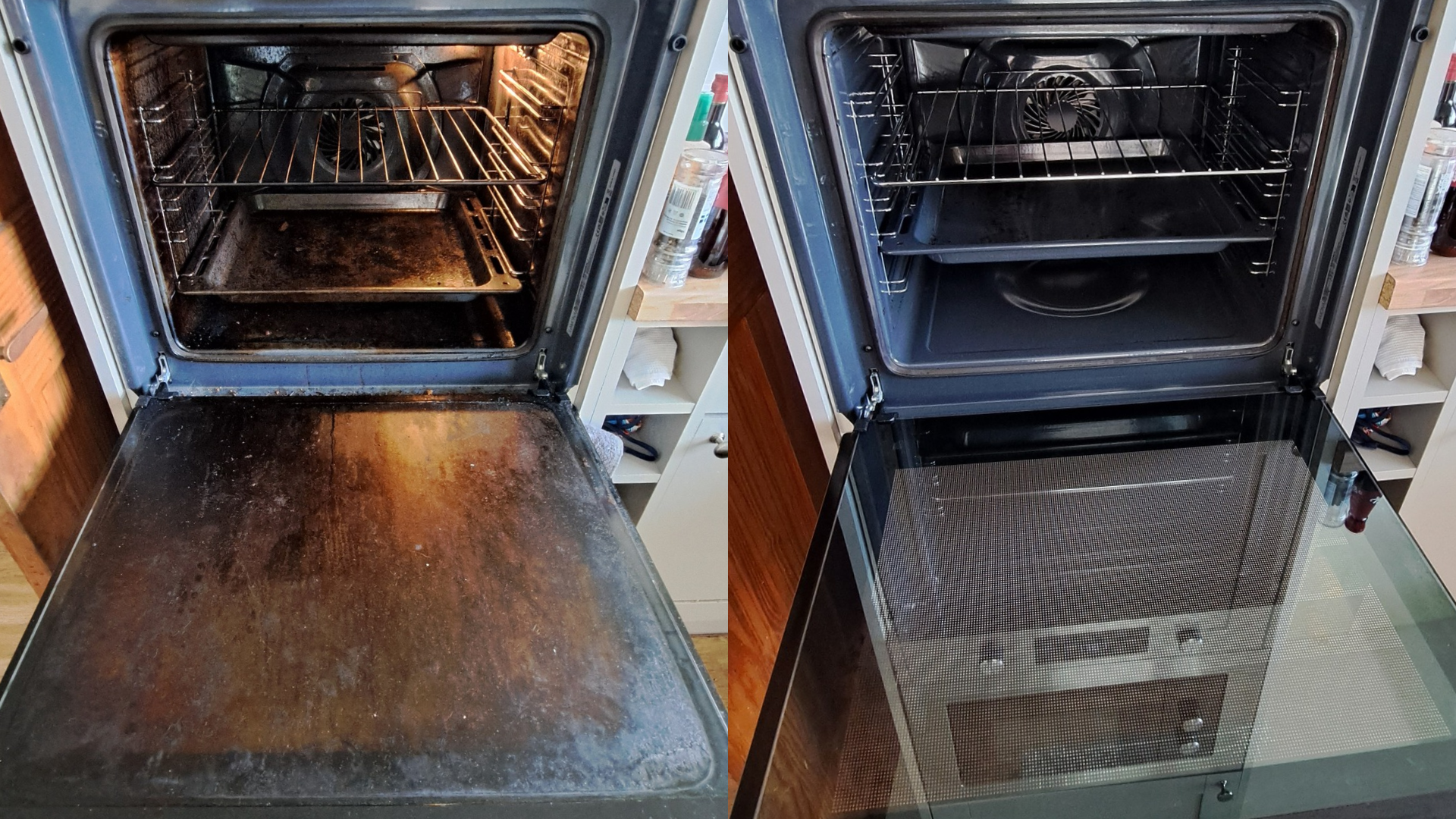
Professional oven cleaning uses eco-friendly chemicals to dissolve carbon without high heat or damage. Technicians dismantle, soak, and reassemble your oven, handling all components self clean cycles miss.
What’s included in a professional clean:
- Full interior oven deep clean (walls, floor, roof)
- Oven door removal and glass cleaning (both sides)
- Rack and hob ring soaking and cleaning
- Seal and hinge inspection
- Reassembly with pressure test
- Typically completed in 2–3 hours
If you want to know How Long An Oven Clean Takes, please read our guide.
The professional advantage:
- Handles months of burnt-on grease
- Cleans components self-clean cycles miss
- Safe on all oven types including AGAs and range ovens
- Extends oven lifespan by preventing corrosion
- No odours, no energy waste, no disruption
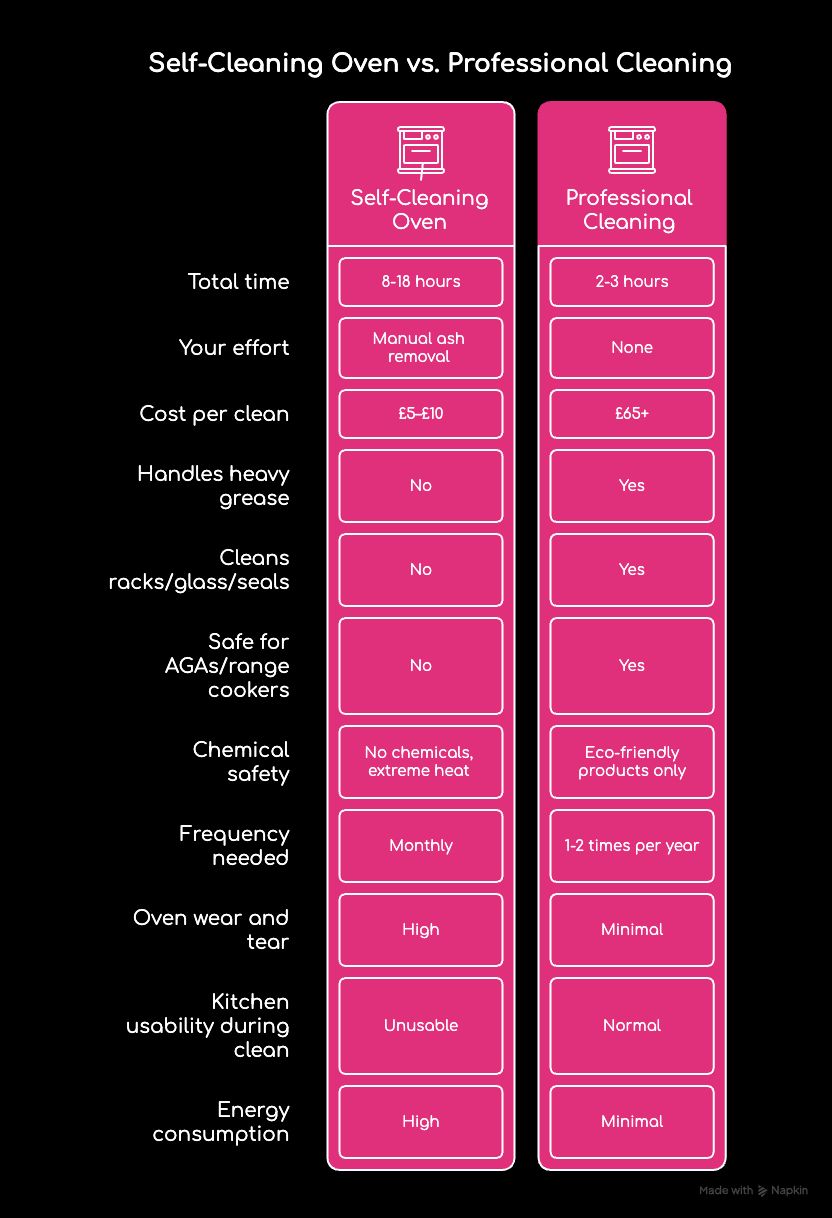
Self-Cleaning Oven vs Professional Cleaning: Comparison
Factor
Self-Cleaning Oven
Professional Cleaning
Total time
8-18 hours
2-3 hours
Your effort
Manual ash removal + separate racks/glass
None (technician handles everything)
Cost per clean
£5–£10 (electricity)
£65+ with Oven Rescue
Handles heavy grease
No
Yes
Cleans racks/glass/seals
No
Yes
Safe for AGAs/range cookers
No, risks damage
Yes
Chemical safety
No chemicals, but extreme heat
Eco-friendly products only
Frequency needed
Monthly (maintenance)
1-2 times per year
Oven wear and tear
High (heating elements, seals degrade)
Minimal
Kitchen usability during clean
Unusable (8–18 hours)
Normal (done in 2–3 hours)
Energy consumption
High (480°C+ heating)
Minimal
Can a Self-Cleaning Oven Be Professionally Cleaned?
Yes. Absolutely.
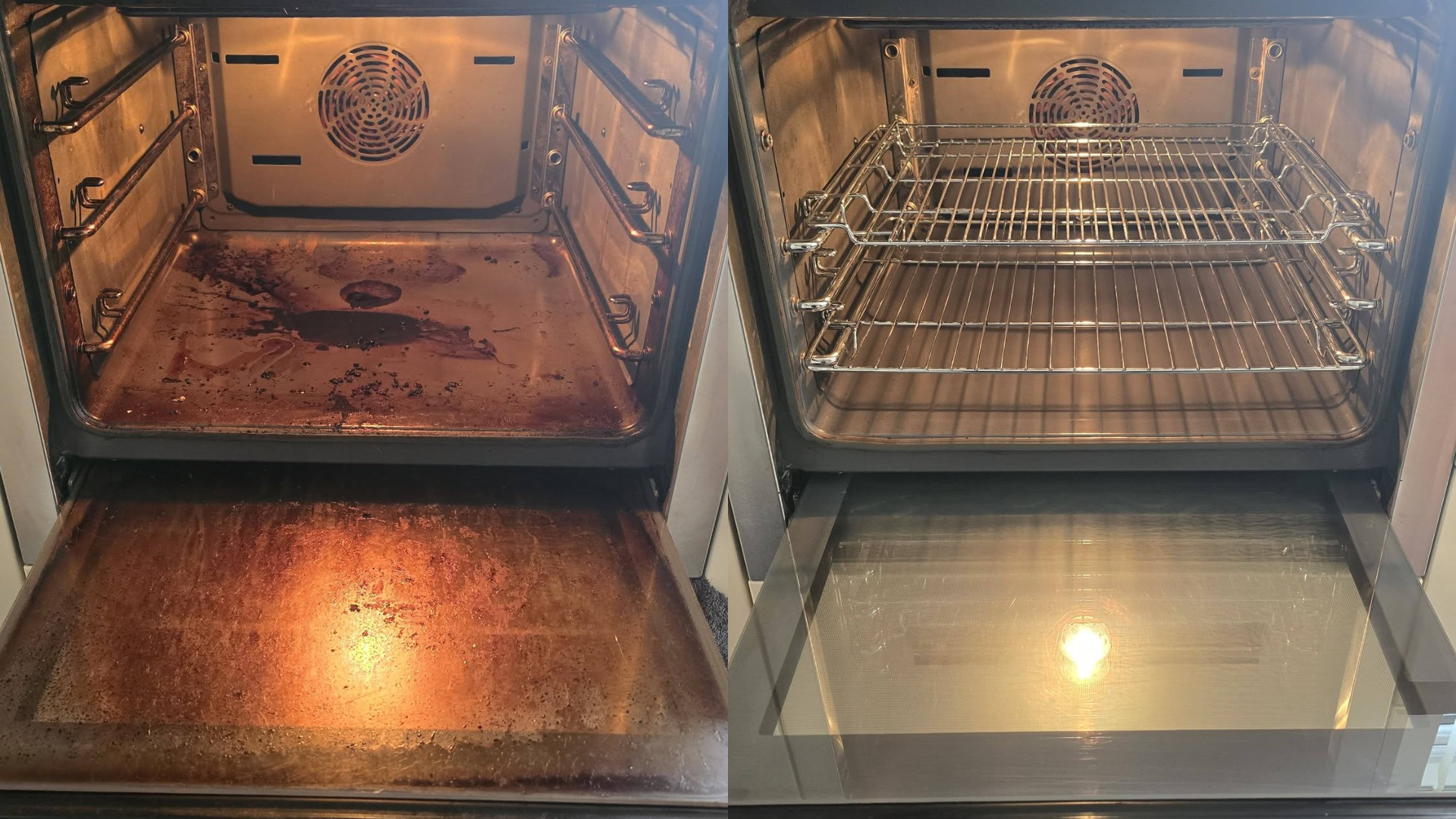
Many homeowners assume that self-cleaning ovens can’t be professionally serviced. That’s false. Professional oven cleaning works on any oven type, including those with self-clean features.
In fact, professional cleaning is often the best way to clean an oven that has a self-clean function but heavy buildup, the self-clean cycle couldn’t remove it, so a technician will. If you’re wondering whether professional oven cleaning is worth it, please read our guide on Should I Get Professional Oven Cleaning?
Special Considerations: AGAs, Range Cookers, and Gas Ovens
AGA and Range Cooker Cleaning
Never use a self-clean function on an AGA or range cooker. The extreme heat damages enamel finishes and can warp door frames permanently. If you want to learn How To Clean An AGA, please read our guide.
For range cooker cleaning:
- Enamel finishes are heat and acid-sensitive
- Professional cleaning is the only safe option
- Avoid DIY methods with vinegar or caustic cleaners
Best option for AGAs and range cookers: Book a professional oven cleaning service trained in these specialty oven types.
Gas Oven Cleaning
Self-cleaning gas ovens are trickier, high heat can affect burner components. Check your manual before using the self-clean function.
Best way to clean a gas oven:
- Verify your manual allows self-clean cycles
- If uncertain, skip the cycle and book professional cleaning
- Gas burners require extra care to avoid water and chemical damage
The Verdict: Which Should You Choose?
Choose Self-Cleaning If:
- Your oven has minimal buildup and you maintain it weekly
- You’re comfortable with 8–18 hours of time and odour
- Your oven is a standard electric model (not AGA or range cooker)
- You accept that racks and glass need manual cleaning
- You prioritise cost over convenience
Choose Professional Cleaning If:
- Your oven has months of burnt-on grease
- You own an AGA, range cooker, or speciality oven
- You want the fastest, most thorough result
- You can’t tolerate your kitchen being unusable for hours
- You want to protect your oven’s lifespan and resale value
- You prefer eco-friendly, safe cleaning products
Frequently Asked Questions (FAQs)
Yes. Any oven, including those with self-clean features, can be professionally cleaned. In fact, professional cleaning is often necessary when a self-clean cycle can’t remove heavy buildup. Oven Rescue handles self-cleaning ovens routinely.
Oven Rescue professional cleaning costs £65+ but extends oven lifespan by 5+ years and prevents repairs (£200–£600+). For most households, one annual professional clean + monthly maintenance delivers the best value.
Weekly wipe-downs (2 minutes) prevent buildup. Monthly baking soda paste (15 minutes) handles stubborn spots. Professional cleaning 1-2 times per year keeps ovens in peak condition. Frequency depends on use, daily cooking warrants more frequent professional cleans.
Self-cleaning uses 480ºC heat to burn grease into ash; you manually wipe it out. Professional cleaning uses eco-friendly chemicals to dissolve grease and cleans all components (racks, glass, seals) in 2–3 hours. Professional is faster, more thorough, and safer for AGAs and range cookers.
No. Never use a self-clean function on an AGA or range cooker. The extreme heat damages enamel finishes permanently. Always book a professional cleaner trained in specialty oven types.
Running monthly self-clean cycles costs £60–£120 annually in electricity. Add accelerated component wear (repairs £200–£600+) and opportunity cost (8–18 hours per cycle). Professional cleaning 1–2 times yearly can cost under £100 and extends lifespan significantly.
Baking soda paste works for light maintenance and prevention but can’t shift months of heavy, carbonised grease. For stubborn buildup, professional cleaning is the only reliable solution that avoids damage.
Most professional cleans take 1-3 hours start-to-finish, depending on oven size and buildup level. Oven Rescue provides estimates based on your specific oven.
Need your oven cleaned? Book your Oven Rescue clean today!